

Treasury & Operations
What Affects Exchange Rates Today? Key Drivers
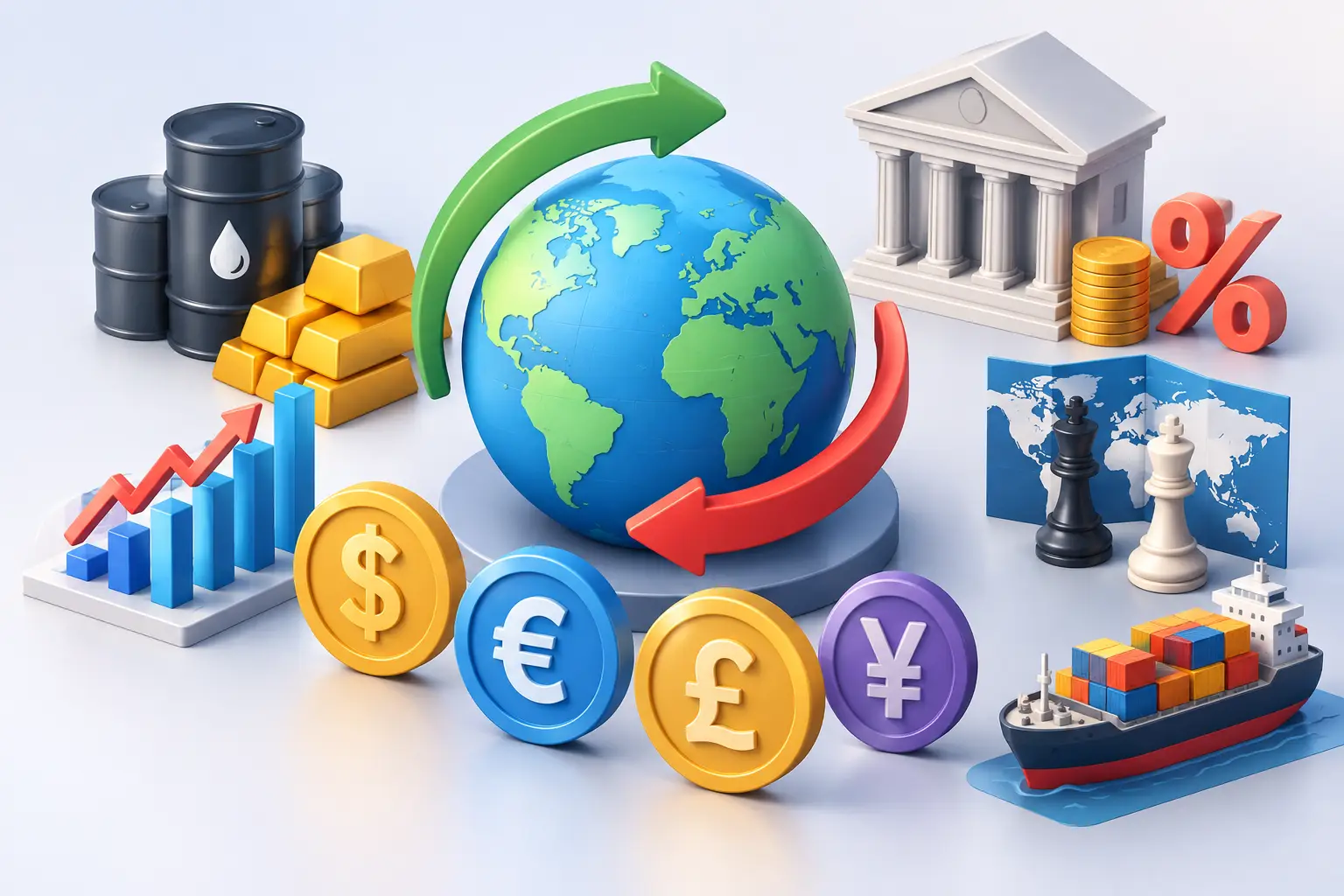
A supplier invoice can look profitable when it is issued and far less attractive when payment is due. For importers, diaspora families, freelancers, and finance teams, understanding what affects exchange rates today is not an academic exercise. It helps determine how much arrives, how much a business pays, and when it makes sense to convert funds.
Exchange rates move because currencies are priced continuously against one another. A currency is not simply “strong” or “weak” in isolation. Its value changes based on demand, economic conditions, market expectations, and events that influence confidence in one country relative to another.
What Affects Exchange Rates Today?
The immediate answer is supply and demand. When more people, businesses, banks, and investors want to buy a currency than sell it, its price can rise. When demand falls or selling increases, it can decline. But the reasons behind that demand are more useful than the headline movement itself.
For people moving money between African markets and global destinations, several forces often operate at once. An interest-rate decision in the United States, a shift in oil prices, a local policy announcement, or a change in global risk appetite can all affect the rate available for a conversion.
Interest rates and central bank decisions
Interest rates are among the most closely watched exchange-rate drivers. Higher rates can make assets denominated in that currency more appealing to investors seeking returns. If a central bank raises rates while other major central banks remain steady, demand for that currency may increase.
The effect is not automatic. Markets usually respond to expectations, not only the decision itself. If investors already expected a rate increase, the currency may move very little after the announcement. If a central bank surprises the market or signals more increases ahead, the reaction can be stronger.
For businesses with scheduled overseas payments, central bank calendars deserve attention. A payment due shortly after a major policy announcement may face more volatility than a payment made during a quieter period.
Inflation and purchasing power
Inflation measures how quickly prices are rising. Over time, persistently high inflation can reduce a currency’s purchasing power and weaken confidence in the economy, particularly if policymakers are slow to respond.
However, the short-term market reaction depends on context. A higher-than-expected inflation report may strengthen a currency if traders believe it will force the central bank to raise interest rates. The same report may weaken it if it suggests economic instability or reduced consumer spending power. That is why a single inflation number rarely tells the full story.
Economic performance and employment data
Growth, employment, manufacturing activity, consumer spending, and business investment all help markets assess an economy’s direction. Strong data can support a currency by suggesting that businesses are expanding and consumers are able to spend. Weak data can have the opposite effect.
Still, the comparison matters. A country can report positive growth and see its currency fall if another economy is growing faster or offering higher yields. Exchange rates are relative prices, so markets are constantly comparing one outlook with another.
Trade, commodities, and the flow of foreign currency
A country that exports more goods and services may receive greater foreign-currency inflows. This can support demand for its local currency, especially when export revenues are steady and accessible through formal channels. Countries with large import needs may face greater demand for foreign currency, which can place pressure on the local exchange rate.
Commodity prices matter significantly in many African economies. Oil, gold, agricultural products, metals, and other exports can influence export earnings, government revenue, and the amount of foreign currency entering the market. When a major export price falls, the effect can extend well beyond that sector.
For an importer, this creates a practical risk. A rise in the cost of a key commodity may affect the exchange rate before it appears in supplier pricing. Finance teams should consider both their direct currency exposure and the economic factors affecting the markets where they operate.
Remittances, tourism, and capital flows
Remittances and tourism receipts can increase the supply of foreign currency in a market. Foreign direct investment, portfolio investment, and development funding can have a similar effect. Conversely, when investors move capital to perceived safer markets, currencies in emerging economies may come under pressure.
These flows can be seasonal or event-driven. For example, periods with high travel activity, school-fee payments, or year-end business settlements may increase demand for particular currencies. A business should avoid assuming that last month’s rate will remain available simply because its underlying operations have not changed.
Politics, regulation, and confidence
Political stability matters because currency markets value predictability. Elections, changes in fiscal policy, conflict, sanctions, debt concerns, or uncertainty around government decisions can lead investors and businesses to reduce exposure to a currency.
Regulation also has a direct operational impact. Rules affecting access to foreign currency, import payments, capital movement, customer verification, and reporting requirements can change how easily funds move through a market. Clear, consistently applied policy can support confidence. Sudden restrictions or conflicting guidance can increase uncertainty and widen the gap between quoted rates and executable rates.
For cross-border payments, compliance is not separate from pricing. A payment that lacks the required documentation may be delayed, rejected, or require additional review. Working with a provider that takes identity verification, transaction monitoring, and customer due diligence seriously helps reduce avoidable disruption.
Global risk sentiment can move rates quickly
Not every exchange-rate move begins within the country whose currency is changing. During periods of global uncertainty, investors often favor currencies viewed as liquid or defensive, such as the U.S. dollar. This can affect a broad range of currencies at the same time.
Geopolitical tension, banking stress, major equity-market declines, and unexpected economic shocks can all trigger this behavior. When risk sentiment improves, capital may return to higher-growth or higher-yielding markets. These shifts can occur quickly, which is why relying on a single news headline is rarely enough.
Market liquidity and the real rate you receive
The rate shown on a chart is not always the rate available for your transaction. Liquidity, transaction size, payment route, settlement timing, and market hours can influence the executable price.
A currency pair with deep liquidity generally has more active buyers and sellers, which can result in narrower spreads. Less frequently traded currencies or large, urgent conversions may carry wider spreads because the provider is managing more pricing and settlement risk. This does not necessarily mean the quote is unfair. It means the market conditions behind the quote are different.
The cost of conversion also includes more than the headline rate. Businesses should ask whether fees are stated separately, whether the quoted rate is locked for a defined period, and how long settlement is expected to take. Transparency makes it easier to compare the total cost of a payment rather than focusing on one number.
How to respond when rates are moving
The best approach depends on your purpose, timing, and risk tolerance. An individual sending funds for a fixed obligation may prioritize certainty and speed. An importer managing recurring supplier payments may need a more structured process, including payment forecasts, approval controls, and defined conversion windows.
Start by identifying which currencies you will need, how much you expect to pay, and when the payment must settle. Then separate urgent payments from flexible ones. Waiting for a better rate can work, but it can also create a larger cost if the market moves against you. For larger transactions, splitting conversions over time may reduce the risk of committing everything at one unfavorable point, though it may also prevent you from benefiting fully if the rate improves.
Maintain clear transaction records, invoice support, and beneficiary details before you initiate a conversion. Good preparation protects speed when a favorable rate becomes available. It also helps meet compliance requirements without last-minute delays.
For businesses handling regular international payments, ParkPay can support structured FX execution, cross-border settlements, and compliance-focused processes in one operating flow. The goal is not to predict every market move. It is to make informed decisions, execute securely, and keep international payments moving when timing matters.
Exchange rates will always react to changing information. The practical advantage comes from knowing which changes matter to your currency pair, planning around fixed obligations, and choosing a transparent provider that can execute with clarity when the right time to convert arrives.